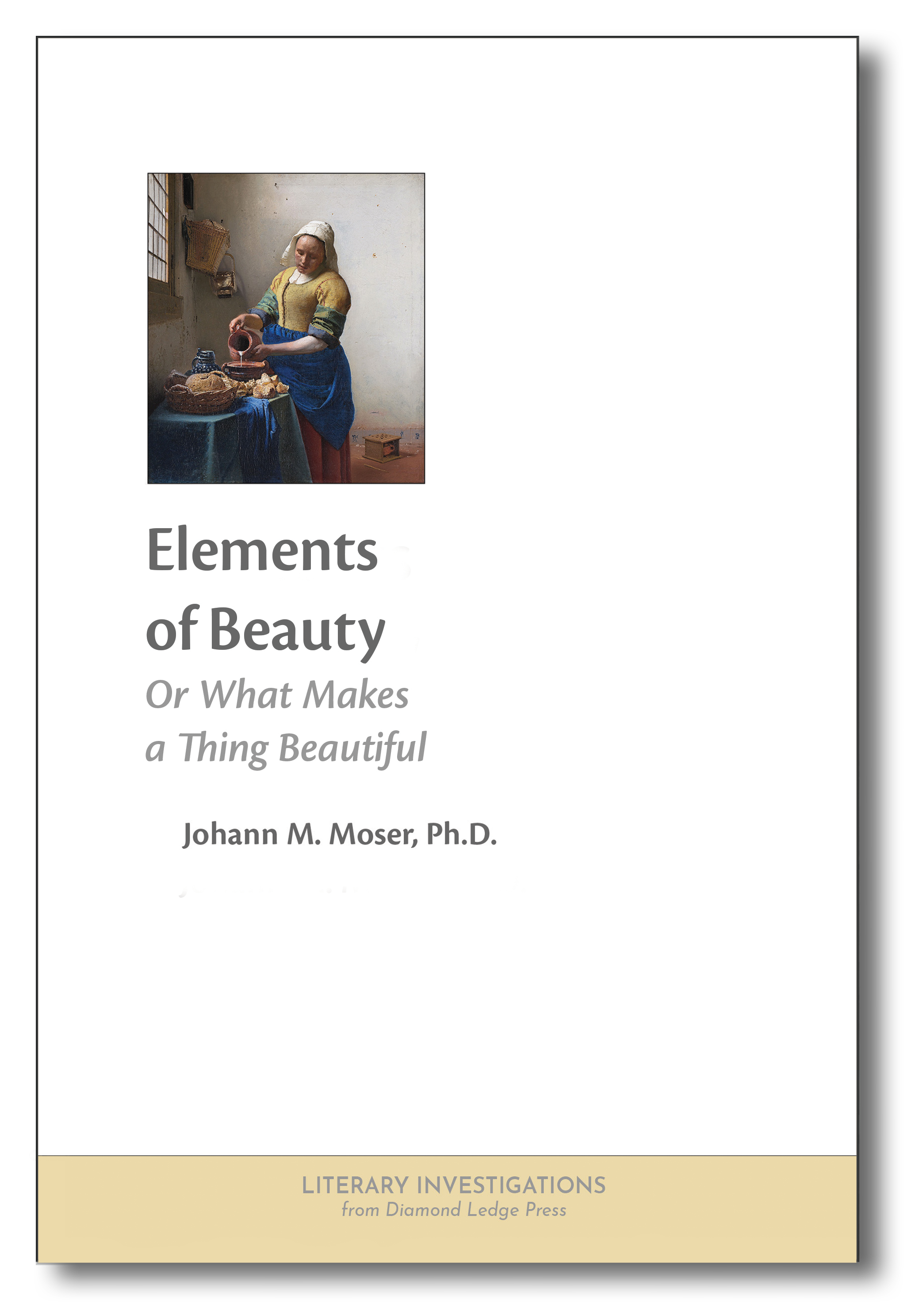
In the first of the two long talks published here, Johann Moser defends the classical view that beauty is grounded in the irreducible splendor of form itself, enjoyed and enjoyable by all cultures and ages.
Yet often today, beauty is said also to lie elsewhere: “She has such a beautiful soul”; “The Pythagorean theorem is beautiful”; “Beauty is truth, truth beauty.”
Moser shows that to discover the very essence of beauty and to clearly delineate its elements, we must leave behind such high-sounding but ultimately unhelpful claims and turn first to consideration of real things that are universally considered beautiful.
There, with a precision rarely found in talk of beauty today, Moser delicately pries beauty free from scores of analogous but ultimately non-aesthetic values.
That done, he shows that nine specific elements of beauty remain – the nine qualities that characterize any and all unequivocally beautiful things.
In the second lecture published here, and with equal care and precision, Moser distinguishes the many kinds of values borne by fine works of religious art and explores the frequent fusion of aesthetic and religious values there by addressing – and resolving – the narrower question of whether there can be such a thing as a Catholic theory of beauty.